
Blue Badge Supporting Evidence Guidance
Supporting evidence is a vital part of your application. If the evidence you supply is not suitable, your application will be delayed or refused. Please follow the instructions below carefully so you can get it right first time.
What evidence should I provide?
You will need to include supporting evidence, such as those listed below. This is your opportunity to provide evidence showing how you meet the Blue Badge criteria. All evidence provided should clearly state the name of the applicant it refers to and should include full, legible copies. Please only attach copies of documents, we cannot return original documents.
Examples of useful evidence
- A letter of diagnosis, as up to date as possible
- Evidence of the progression of the condition over time
- Evidence of prescribed medications relevant to your condition
- Evidence of specialist consultations or referrals for such
- Evidence of risk planning/assessment
- Your patient summary or Summary Care Records
- Education Health and Care Plans (EHCP)
- Care plans from social care teams
- Social housing letters/assessment reports from local authority
- Letters from other professionals involved in your care
- Personal Independence Payment (PIP) decision letters
- Evidence of other benefits received
- Contact details of professionals who can support your application.
Please be aware that we cannot award a Blue Badge based solely on evidence from a GP, and we cannot reimburse any costs incurred in obtaining evidence.
Example
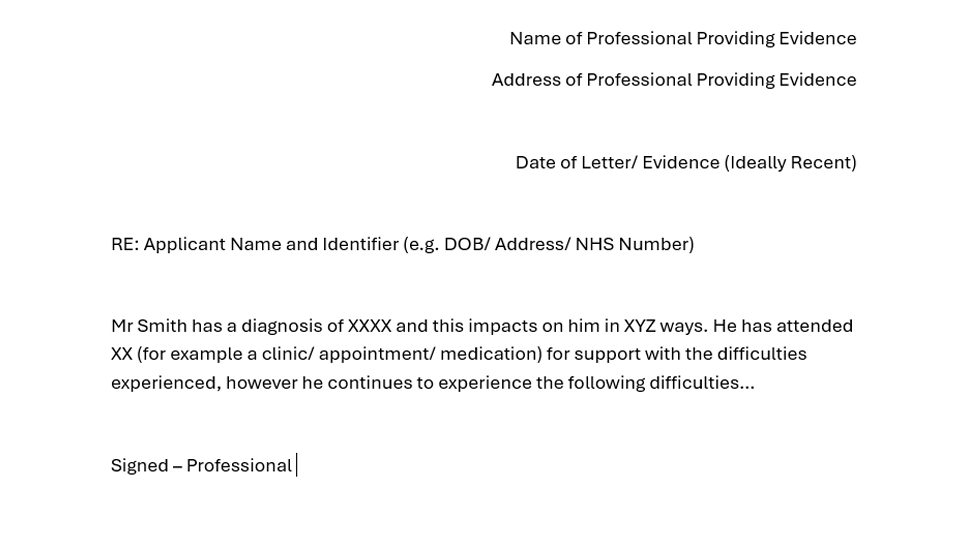
- States Name and Address of Professional Providing Evidence
- States name and identifier of Applicant (e.g. DOB/ Address/ NHS Number)
- The supporting evidence is dated and relatively recent/up-to-date
- States the diagnosis/ presenting difficulty of the applicant
- States how the diagnosis/ presenting difficulty impacts on the applicant in daily life/ when undertaking a journey
- States any other management strategies which have been tried to address the reported difficulties
- Document is copied in full, with all pages and signature present, is not blurred and is clearly legible.
Examples of evidence which is unlikely to be useful
Example 1

- Letter does not state the applicant’s diagnosis or how it impacts on them and their ability to function or undertake a journey.
Example 2

- Letter does not provide any information regarding diagnosis, impact of a condition or outcome of the appointment attended.
Example 3

- Document is blurred/ illegible / does not state who it is regarding or any identifiers (e.g. DOB/ NHS number) / does not state who it is written by / is missing pages or full document.