Air pollution is the biggest environmental risk to public health.
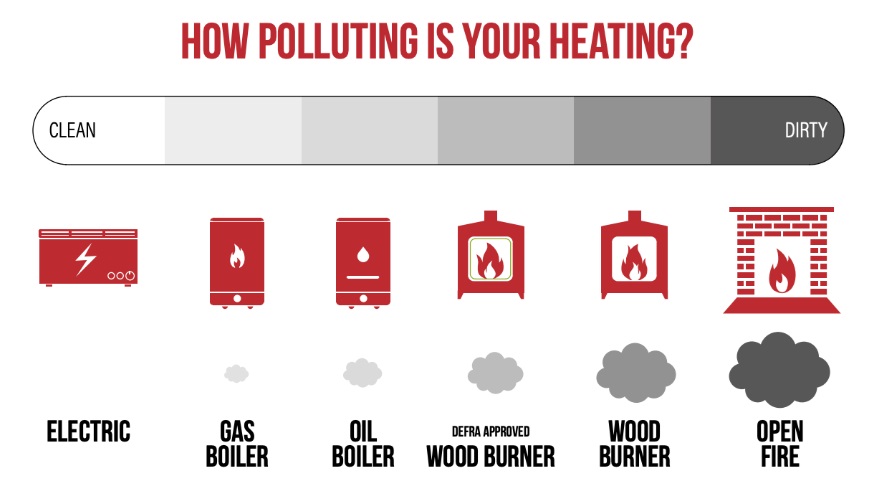
Using a stove or open fire at home is a major contributor of a pollutant called fine particulate matter (known as PM2.5). These tiny particles can damage your lungs and other organs and can be harmful to your health.
Making small changes to how you burn can provide benefits such as:
- Improving the air we all breathe by reducing the amount of pollution produced.
- Keeping you and your family safe by reducing the risk of chimney fires.
- Helping you get the most out of your stove or open fire so that it performs better – by using less fuel to produce more heat.
What you can burn in smoke control areas
The Department for Environment, Food & Rural Affairs (DEFRA) allows only certain fuels for burning in smoke control areas. You can find the list of authorised fuels here. If you are using a DEFRA-approved appliance, please consult the specification documents for the correct fuel for those appliances.
Exempt appliances that can burn unauthorised fuels
Some fuels that are not on DEFRA’s authorised fuels list, such as dried wood logs, can be used in an exempt appliance; however, you can still only burn the type of fuel specified in the instructions for the appliance. Details of exempt appliances can be found here.
You must only use the types of fuel that the manufacturers say can be used in the appliances.
Under the Clean Air Act 1993, you could receive a £300 Fixed Penalty Notice (FPN) if you emit smoke from your chimney in a smoke control area. Failure to pay the FPN could lead to prosecution and a fine of up to £1,000. Regardless of whether you are in a smoke control area or not, you may also be prosecuted if the smoke causes a statutory nuisance to other residents.
Why it matters
Air pollution impacts the health and well-being of everyone, particularly children, the elderly, and those with respiratory conditions such as asthma. Harmful smoke and pollutants in the air can aggravate breathing difficulties, trigger asthma attacks, and contribute to long-term health problems like heart disease and lung cancer. By reducing smoke and other air pollutants, we can create a healthier environment for our community and protect our most vulnerable residents.
How can you help?
- Switch to authorised fuels
- Avoid open fires in smoke control areas
- Use approved stoves and heaters
- If you are considering buying an appliance, please consider a DEFRA-approved appliance.
Check it regularly
Regular maintenance of your stove or open fire means it will perform better, use less fuel to produce more heat, and produce fewer harmful particles.
To properly maintain your stove, you should:
- Make sure your stove is installed by a registered installer. Use the HETAS website to find a registered installer.
- Get your stove serviced once a year. If you’re unsure whether your current system was installed correctly, you can get this checked at your annual service.
- Always use your stove in line with the manufacturer and installer’s guidance, including only burning suitable fuels.
In addition, there are actions you can take to help maintain both your stove or open fire.
You should regularly:
- Clean out the ash
- Check firebricks for cracks
- Clean the stove glass
- Check the seal around the stove door
- Clean the outside of stove or open fire.
Sweep it professionally
An important part of maintaining your stove or open fire is getting your chimney swept at least once a year by a chimney sweep. Soot and tar build up in your chimney over time, reducing its efficiency and increasing the risk of chimney fires.
Putting a reminder in your calendar is a useful way to remember to get your chimney swept each year.
Find a chimney sweep through:
Feed it the right fuel
To help improve the air we breathe and ensure householders choose cleaner fuels, sales of traditional house coal and wet wood (the two most polluting fuels) have been phased out in England.
Cleaner alternatives, such as dry wood and manufactured solid fuels, produce less smoke and pollution than wet wood or traditional house coal and are cheaper and more efficient to burn.
You should always check which fuel types are recommended for your appliance. Using the wrong fuel could damage your appliance, affect your chimney, and invalidate your warranty.
Types of fuel